
joli

Joli Biz  Agent

Empower + Earn

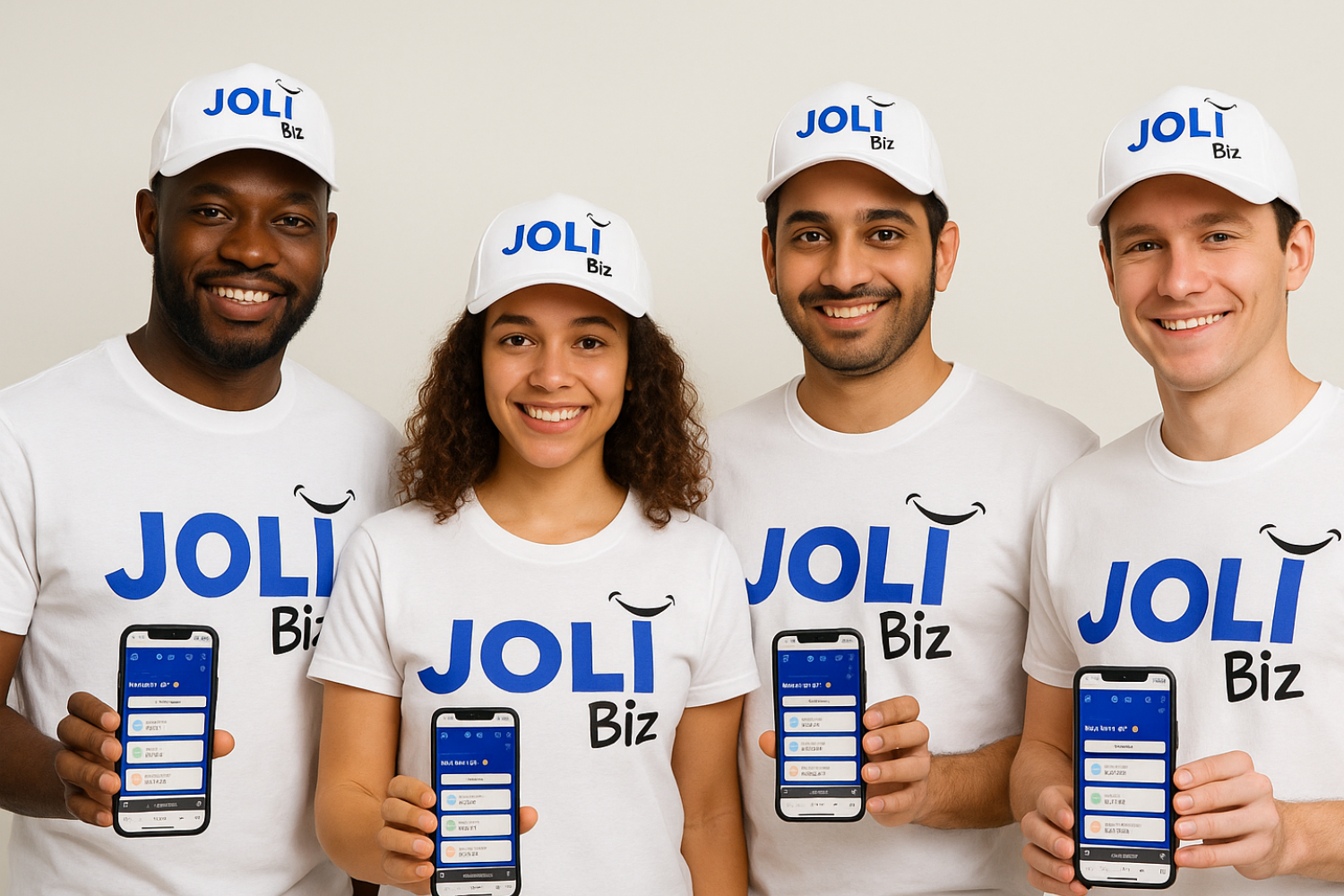
A Joli Biz Agent is a local business hero who helps small businesses go digital using our powerful business software. Whether you’re passionate about entrepreneurship, already run a business, or want a flexible side hustle, you can earn income by helping others grow.
Increased customer loyalty and engagement
Increased Revenue
Optimised business operations
SIGN UP NOW
Recurring 30% Commission
Earn it every month for each sign-up 
Free  Sign Up
Zero Upfront Fees to start promoting
Training 
Free Training & Sales Scripts

Why Business Owners Need It

  • They are overwhelmed by admin. They use notebooks, WhatsApp, and guesswork to run their business.
  • Most don’t reward loyalty, and lose clients to more organised competitors.
  • Staff sell without recording properly, take cash without tracking, or don’t follow instructions.
  • Customers only come at month-end, leaving mid-month sales dry.
  • They don’t know which products sell best, which days are slow, or how staff are performing.

SIGN UP NOW
j42

Which businesses need it

It can be used by A LOT of different businesses below are some of them
  • Shop owners, Restuarants
  • Hair & Nail Salons & Nail techs
  • Car washes & Laundromats
  • Clothing boutiques & Bakers
  • People who sell on social media
  • Anyone who needs help looking more professional and managing their business digitally
SIGN UP NOW

Frequently Asked Questions

Just a smartphone, internet access, and the willingness to promote and help businesses grow. No prior sales experience is required — we train you!

No, you can train at home using the training pack we send to you 

You earn 30% from each paying clients every month for as long as they are signed up

You will receive a monthly report showing all your sign-ups, active clients, and how much commission you’ve earned. Sent to your email!

You earn commission monthly for every active client you sign up. Payments are made directly to your bank account

No — it’s flexible. You can do it part-time, after hours, or even as a side hustle. Most agents promote through WhatsApp, social media, or local business visits.

Absolutely! Many agents are also JoliBiz users. It makes it easier to show others how it works — and you’ll understand it better too.

No, commission is only earned when the client becomes a paying user. But don’t worry – we’ll teach you how to guide your clients so they see the value and are more likely to sign up after the trial!

Users
Joli Digi Shop
Loyalty Rewards
Contacts
Point Of Sale
Reports
Point Of Sale
Reports
Stock Transfer
Stock Adjustment
Expenses
Accounting
Bookings
Client Relations
Stock Transfer
Accounting
Essentials
Digital Catalogue
Users
Joli Digi Shop
Loyalty Rewards
Contacts
Point Of Sale
Reports
Stock Transfer
Stock Adjustment
Expenses
Accounting
Bookings
Client Relations
Stock Transfer
Accounting
Essentials
Digital Catalogue
Users
Joli Digi Shop
Loyalty Rewards
Contacts
Point Of Sale
Reports
Stock Transfer
Stock Adjustment
Expenses
Accounting
Bookings
Client Relations
Stock Transfer
Accounting
Essentials
Digital Catalogue
Untitled (200 x 150 px) (10)

User Management

The User Management feature in business is designed to streamline the administration of user accounts, roles, and permissions. This feature is crucial for maintaining an organized and secure system where each user has access to only the information and functionalities they need.
  • Enhanced Security: Restrict access to sensitive data and critical functions, protecting your business from internal threats and data breaches.
  • Operational Efficiency: Streamline user management processes, reducing administrative workload and enabling focus on core business activities.
  • Motivated Sales Team: Implement fair and motivating commission structures, driving sales performance and achieving business goals.
Creation and Management: Administrators can create user accounts for employees, providing each user with unique login credentials. This ensures that every action within the system is traceable to a specific user.

Profile Information: Each user account can store personal details, contact information, and work-related data.

Roles and Permissions

Role Assignment: Users can be assigned specific roles based on their job functions. Common roles might include Admin, Sales Representative, Inventory Manager, Customer Service, etc.

Permission Levels: Each role comes with predefined permissions, determining what actions a user can perform within the software. For example, an Admin might have full access, while a Sales Representative might only access sales-related data.

Custom Roles: Administrators can create custom roles tailored to the specific needs of the business, allowing for flexibility in how users interact with the system.

Sales Commission Agents

Agent Setup: Sales personnel can be designated as commission agents. This setup includes assigning agents to specific customers or sales territories.

Commission Structures: Administrators can define commission structures, which might include fixed rates, percentage-based commissions, or tiered commissions based on sales performance.

Tracking and Reporting: The software can track sales made by each agent, automatically calculating their commissions. Detailed reports can be generated to review performance and commission payouts.

Imagine a retail business using user management features in their software:
Managers have full access to inventory reports, sales data, and employee schedules.
Sales Associates can process sales, view their own sales performance, and update customer information.
Stock Controllers have access to stock levels, supplier information, and restocking schedules.
Sales Commission Agents have dedicated profiles where their sales targets, commission rates, and performance metrics are tracked automatically, ensuring they are rewarded accurately and timely.
Untitled (200 x 150 px) (24)

Digi Shop

Joli Digi Shop enables business owners to have an online shop which seamlessly integrates with the Joli Biz Software. This feature allows customers to pre-order products for collection or shipment, and it ensures that your online shop remains synchronized with your business software in real-time. 
  • Enhanced Customer Experience: Provide customers with flexible ordering options, including pre-order for collection or shipment, improving convenience and satisfaction.
  • Streamlined Operations: Eliminate the need for separate updates to your online shop, reducing administrative workload and minimizing the risk of errors.
  • Real-Time Inventory Management: Ensure accurate inventory levels are maintained with automatic stock adjustments for online purchases.
Real-Time Sync with Main Business Account
Automatic Updates: Any changes made to your product catalog in the main business software, such as adding new products, updating prices, or changing descriptions, are instantly reflected in the Joli Digi Shop.

Stock Adjustments: When purchases are made through the online shop, the stock levels in your main business account are automatically adjusted to maintain accurate inventory records.

Pre-Order for Collection or Shipment
Flexible Ordering Options: Customers can choose to pre-order items for in-store collection or opt for shipment to their preferred address.
Order Management: Manage and track pre-orders, ensuring timely fulfillment and customer satisfaction.
No Separate Updates Required
Integrated System: The integration ensures that there is no need to separately update your online shop. All updates to the product catalog and stock levels in the business software are mirrored in real-time on Joli Digi Shop.
Customer Groups

Data Import Tools:Utilize tools to import contacts from various sources, including spreadsheets, CRM systems, and email lists, ensuring seamless data integration.

Data Mapping: Map imported data fields to the system’s contact fields accurately, preventing data loss or inconsistencies.

Duplicate Management: Detect and merge duplicate contacts during the import process to maintain a clean and accurate database.

Imagine a beauty products store using Joli Digi Shop integration with their main business software
Real-Time Sync with Main Business Account:

The store updates its product catalog to include a new line of skincare products. These updates are automatically reflected in the Joli Digi Shop, ensuring customers see the latest offerings without any delay.

A customer purchases a popular moisturizer online. The stock level for the moisturizer in the main business account is adjusted in real-time to reflect the sale.

Pre-Order for Collection or Shipment:

A customer pre-orders a set of beauty products for collection. The store prepares the order for pickup on the scheduled date.

Another customer places an order for shipment. The store processes the order and ships the products to the customer’s address.

No Separate Updates Required:

The store introduces a holiday discount on certain products. The discount is applied in the main business software, and the Joli Digi Shop automatically reflects the discounted prices.

Untitled (200 x 150 px) (25)

Loyalty Rewards 

The Loyalty Rewards is designed to help businesses enhance customer retention and engagement by offering rewards for repeat purchases and other actions. This feature allows businesses to create and manage a loyalty program.
  • Increased Customer Retention: Encourage repeat purchases and build long-term relationships with customers through rewards and incentives.
  • Higher Spending: Incentivize higher spending with tiered rewards and exclusive offers for loyal customers.
  • Improved Customer Insights: Gain valuable insights into customer behavior and preferences to tailor marketing efforts 
Loyalty Points
Point Accumulation: Customers earn points for every purchase they make, based on a predefined points-per-dollar ratio.

Points Redemption: Customers can redeem accumulated points for discounts, free products, or other rewards.

Points Balance Tracking: Track the points balance for each customer, allowing them to view and manage their points.

Program Rules
Points Expiry: Set rules for points expiration to encourage timely redemption and continuous engagement.
Consider a beauty products store implementing the Loyalty Rewards feature in their business software:
Loyalty Points System: Customers earn 1 point for every $1 spent on beauty products. For example, a customer who spends $50 earns 50 points. Customers can redeem 100 points for a $10 discount on their next purchase.
Tiered Rewards: The store creates a reward program that includes discounts, free samples of new products, and exclusive access to special events. The store implements tiered rewards: Bronze (0-499 points), Silver (500-999 points), and Gold (1000+ points). Gold members receive free shipping on all orders.
Program Rules and Policies: The store defines eligibility criteria: customers must register for the loyalty program and make a minimum purchase of $25 to start earning points. Points expire after 12 months if not redeemed.
Analytics: The store monitors the performance of the loyalty program, analyzing participation rates and the impact on sales and customer retention. Customer insights are used to refine the loyalty program and tailor marketing efforts, such as identifying popular rewards and adjusting point thresholds.
Untitled (200 x 150 px) (11)

Contacts Management

The User Management feature in business software is designed to streamline the administration of user accounts, roles, and permissions. This feature is crucial for maintaining an organized and secure system.
  • Centralized Information: Consolidate all contact information in one place, making it easily accessible and manageable.
  • Enhanced Relationship Management: Improve relationships with suppliers and customers through detailed profiles and communication logs.
  • Targeted Marketing: Use customer groups to implement targeted marketing campaigns.
Suppliers
Supplier Profiles: Maintain detailed profiles for each supplier, including contact information, payment terms, delivery schedules, and product catalogs.

Order History: Track order history and interactions with suppliers, facilitating easy reordering and relationship management.

Performance Metrics: Monitor supplier performance metrics such as delivery reliability, product quality, and pricing trends.

Customers

Customer Profiles: Create comprehensive profiles for each customer, capturing personal information, purchase history, preferences, and contact details.

Communication Logs: Keep records of all communications with customers, ensuring consistent and informed interactions.

Loyalty Rewards: Manage customer loyalty programs, tracking points, rewards, and engagement levels.

Import Contacts

Segmentation: Group customers based on criteria such as purchase behavior, demographics, or loyalty status, allowing for targeted marketing and personalized service.

Customer Groups

Data Import Tools:Utilize tools to import contacts from various sources, including spreadsheets, CRM systems, and email lists, ensuring seamless data integration.

Data Mapping: Map imported data fields to the system’s contact fields accurately, preventing data loss or inconsistencies.

Duplicate Management: Detect and merge duplicate contacts during the import process to maintain a clean and accurate database.

Imagine a retail business using user management features in their software:
Suppliers: The business can maintain detailed profiles for each supplier, including contact information, product catalogs, and order histories. This helps in negotiating better terms and managing supplier relationships efficiently.
Customers: The business can track customer purchase histories, preferences, and communication logs, enabling personalized service and targeted marketing efforts.
Customer Groups: The business can segment customers into groups such as "Frequent Buyers," "Wholesale Customers," and "New Customers," allowing for tailored promotions and communications.
Import Contacts: When attending trade shows or receiving new contact lists, the business can quickly import these contacts into the system, mapping relevant fields and merging duplicates to ensure a clean database.
Untitled (200 x 150 px) (12)

Product Management

Product Management is designed to manage all aspects of a product's lifecycle. This includes listing products, adding new products, updating product details and prices, printing labels, managing variations and more.

  • Accurate Inventory Management: Maintain accurate and up-to-date inventory records, preventing stock-outs and overstock situations.
  • Enhanced Customer Experience: Offer a well-organized and detailed product catalog, improving customer shopping experience and satisfaction.
  • Flexible Pricing Strategies: Implement flexible pricing strategies with price tiers and discounts, optimizing revenue and customer retention.
List Products
Product Catalog: View a complete catalog of all products with detailed information such as name, SKU, category, price, and stock levels.
Search and Filter: Easily search and filter products based on various criteria such as category, brand, stock status, or price range.
Add Products
Product Details: Add new products by entering essential details like name, SKU, description, category, brand, price, and initial stock.
Images and Descriptions: Upload images and detailed descriptions to enhance product listings and improve customer experience.
Update Products
Edit Details: Update existing product details, including name, description, category, brand, and stock levels.
Batch Updates: Make bulk updates to multiple products at once, saving time and ensuring consistency.
Update Price
Price Adjustment: Modify product prices individually or in bulk, adjusting for sales, promotions, or market changes.
Historical Pricing: Track historical pricing changes to analyze pricing strategies and trends.
Print Labels
Label Templates: Create and customize label templates to include essential information like product name, SKU, price, and barcodes.
Batch Printing: Print labels in batches for new stock, ensuring quick and efficient labeling.
Variations
Product Variants: Manage product variations such as size, color, or material, allowing customers to choose from multiple options.
Variant-Specific Details: Set specific details and stock levels for each variation, ensuring accurate inventory management.
Import Product
Data Import Tools: Import product data from various sources, including spreadsheets and other databases, to quickly populate the product catalog.
Field Mapping: Map imported data fields to the system’s product fields accurately to prevent data inconsistencies.
Import Opening Stock
Initial Stock Setup: Import initial stock levels for new products during the setup phase, ensuring accurate starting inventory counts.
Selling Price Group
Price Tiers: Create and manage different price tiers for various customer groups, such as wholesale, retail, or VIP customers.
Automatic Pricing: Automatically apply the appropriate price tier to customers based on their group, simplifying pricing management.
Units
Measurement Units: Define and manage units of measurement for products, such as pieces, kilograms, or liters, ensuring consistency in inventory tracking.
Categories
Product Categorization: Organize products into categories and subcategories, making it easier to manage and locate items.
Category Management: Add, edit, and delete categories as needed, maintaining a structured product catalog.
Brands
Brand Analytics: Analyze sales and performance data by brand to identify top-performing brands and optimize inventory.
Brand Profiles: Create and manage brand profiles, associating products with their respective brands for better organization and branding.
Warranties
Warranty Tracking: Manage product warranties, including warranty periods, terms, and conditions.
Customer Service: Provide customers with warranty information and support, enhancing customer satisfaction and loyalty.
Imagine a retail business using user management features in their software:
Imagine an electronics retail business using product management features in their software:

List Products: The business can view its entire product catalog, including details like product name, SKU, price, and stock levels.

Add Products: New electronics, such as smartphones or laptops, can be added to the catalog with detailed descriptions and images.

Update Product: If a product's specifications change or new features are added, the business can easily update the product details.

Update Price: During promotional periods or sales events, the business can quickly adjust prices for multiple products.

Print Labels: Labels for new stock can be printed in batches, ensuring all products are correctly labeled with barcodes and prices.

Variations: Products like smartphones can have variations for different storage capacities or colors.

Import Products: When launching new product lines, the business can import product data from suppliers, saving time on data entry.

Import Opening Stock: Initial stock levels for newly added products can be imported, ensuring accurate inventory records from the start.

Selling Price Group: Different price tiers can be set for retail and wholesale customers, automatically applied during checkout.

Units: Products can be managed in appropriate units, such as pieces for electronics or meters for cables.

Categories: Products can be organized into categories like "Smartphones," "Laptops," and "Accessories" for easy browsing.

Brands: Products can be associated with brands like Apple, Samsung, or Dell, helping customers find their preferred brands.

Warranties: Warranty information for products can be tracked and managed, providing customers with accurate warranty support.
Untitled (200 x 150 px) (27)

Purchase Management

Purchase Management facilitates efficient handling of purchasing activities. This includes managing purchase returns, maintaining a purchase list, and adding new purchases with detailed information and attaching relevant documents. 

  • Enhanced Visibility: Maintain clear visibility into purchasing activities, helping to manage cash flow, budget planning, and supplier relationships.
  • Better Supplier Management: Maintain detailed records of supplier interactions and performance, enabling better negotiation and relationship management.
  • Comprehensive Documentation: Keep all purchase-related documents organized and easily accessible, supporting compliance and audit requirements.
Add Purchase
Reference Number: Assign a unique reference number to each purchase for easy identification and tracking.

Purchase Status: Set the status of the purchase (e.g., pending, received, partially received, completed) to track the progress of each order.

Payment Terms: Define payment terms with the supplier, such as net 30, net 60, or cash on delivery, ensuring clear understanding and compliance.

Attach Documents: Attach relevant documents to each purchase, such as invoices, receipts, and delivery notes, for comprehensive record-keeping and easy retrieval.

Purchase Return
Return Process: Manage the return process for purchased goods, including initiating returns, tracking returned items, and updating inventory levels.

Refund and Replacement: Handle refunds or replacements for returned items, ensuring customer satisfaction and maintaining supplier relationships.

Purchase List
Comprehensive Overview: View a complete list of all purchases made, including details such as supplier name, purchase date, total amount, and purchase status.

Search and Filter: Easily search and filter purchases based on criteria such as date range, supplier, status, or reference number.

Detailed Records: Access detailed records for each purchase, including itemized lists of products, quantities, prices, and any associated documents.

Imagine a retail business using purchase management features in their software:
Purchase Return: The business can manage returns of defective or unsold products back to suppliers, tracking the return status and updating inventory levels accordingly.

Purchase List: The business can view a comprehensive list of all purchases, filter by supplier or date, and access detailed records of each transaction.

Add Purchase: When adding a new purchase, the business can: Assign a unique reference number for tracking. Set the purchase status to "pending" until the goods are received. Define payment terms agreed upon with the supplier. Attach the supplier's invoice and any other relevant documents to the purchase record.
Untitled (200 x 150 px) (14)

Sales Management

Sales Management helps streamline and optimize sales activities. It includes functionalities for point of sale (POS), adding managing shipments, applying discounts, managing subscriptions, handling order requests and more.
  • Enhanced Customer Experience: Provide quick and efficient service at the point of sale, improving customer satisfaction and loyalty.
  • Accurate Sales Tracking: Maintain accurate records of all sales transactions, supporting better financial management.
  • Flexible Sales Management: Handle draft sales, quotations, and subscriptions with ease.
Point Of Sale (POS)
POS Interface: User-friendly interface for processing sales transactions quickly and efficiently.

Payment Processing: Accept various payment methods such as cash, credit/debit cards. Sales Receipts: Generate and print sales receipts for customers or send them to their WhatsApp / Email.

Add Sale
Sale Entry: Add new sales transactions with details such as product items, quantities, prices, and customer information.
Payment Terms: Define payment terms for each sale, including immediate payment or credit terms.
Discounts: Apply discounts at the item level or on the total sale amount.
List POS
Sales Overview: View a comprehensive list of all POS transactions with details such as date, time, total amount, and payment status.
Search and Filter: Search and filter POS transactions based on various criteria like date range, payment method, or cashier.
Draft
Draft Sales: Create draft sales transactions for future completion, allowing for flexibility in finalizing sales.

Edit Drafts: Modify draft sales as needed before finalizing and converting them into completed sales.

List Draft
Draft Overview: View a list of all draft sales transactions, including details such as date created, customer, and total amount.
Manage Drafts: Easily manage and update draft sales, converting them into final sales when ready.
Add Quotation
Quotation Creation: Generate quotations for potential sales with detailed information on products, quantities, prices, and terms.

Send Quotations: Email or print quotations to send to prospective customers.

List Sale Return 
Return Management: Track and manage returned items, including reasons for return, refund amounts, and restocking.

Return History: View a history of all sale returns to analyze return trends and manage inventory effectively.

Shipments
Shipping Management: Track and manage the shipment of sold products, including carrier information, tracking numbers, and delivery status.

Shipping Notifications: Notify customers of shipment status and tracking information via email or SMS.

Discounts
Discount Types: Apply various types of discounts such as percentage off, fixed amount, or promotional discounts.

Discount Rules: Set rules for discounts, including eligibility criteria and expiration dates

Subscriptions
Subscription Management: Manage recurring sales and subscriptions for products or services, including billing cycles and renewal terms.

Customer Notifications: Notify customers of upcoming renewals and subscription status changes.

Import Sales
Data Import: Import sales data from various sources, including spreadsheets and other sales systems, to maintain comprehensive sales records.
Field Mapping: Ensure accurate mapping of imported data fields to the system’s sales fields.
Order Request
Order Handling: Manage customer order requests, converting them into sales transactions once fulfilled.

Order Tracking: Track the status of order requests from initiation to completion, ensuring timely fulfillment.

Imagine a retail business using user management features in their software:
Imagine an electronics retail business using product management features in their software:

List Products: The business can view its entire product catalog, including details like product name, SKU, price, and stock levels.

Add Products: New electronics, such as smartphones or laptops, can be added to the catalog with detailed descriptions and images.

Update Product: If a product's specifications change or new features are added, the business can easily update the product details.

Update Price: During promotional periods or sales events, the business can quickly adjust prices for multiple products.

Print Labels: Labels for new stock can be printed in batches, ensuring all products are correctly labeled with barcodes and prices.

Variations: Products like smartphones can have variations for different storage capacities or colors.

Import Products: When launching new product lines, the business can import product data from suppliers, saving time on data entry.

Import Opening Stock: Initial stock levels for newly added products can be imported, ensuring accurate inventory records from the start.

Selling Price Group: Different price tiers can be set for retail and wholesale customers, automatically applied during checkout.

Units: Products can be managed in appropriate units, such as pieces for electronics or meters for cables.

Categories: Products can be organized into categories like "Smartphones," "Laptops," and "Accessories" for easy browsing.

Brands: Products can be associated with brands like Apple, Samsung, or Dell, helping customers find their preferred brands.

Warranties: Warranty information for products can be tracked and managed, providing customers with accurate warranty support.

Untitled (200 x 150 px) (26)

Business Insights Reports

The Reports feature provides comprehensive insights into various aspects of the business, helping in data-driven decision-making and performance monitoring. These reports cover areas such as trending products, sales, activity logs, customer groups and more.

  • Performance Monitoring: Monitor the performance of products, sales channels, employees, and other key areas.
  • Enhanced Security: Track user activities and monitor for any unusual or unauthorized actions.
  • Financial Management: Keep track of expenses, taxes, and financial performance to ensure fiscal responsibility.

Trending Products Report
Top-Selling Products: Identify the best-selling products over a specified period.

Product Trends: Analyze sales trends for specific products to determine popularity and seasonal variations.

Inventory Recommendations: Get insights into inventory levels to ensure popular products are always in stock.

Tax Reports
Tax Calculation: Summarize the taxes collected and paid over a specific period.

Tax Liability: Calculate tax liabilities to ensure accurate and timely tax filings.

Sales Reports
Sales Performance: Monitor overall sales performance, including total sales, average order value, and number of transactions.

Refund and Replacement: Handle refunds or replacements for returned items, ensuring customer satisfaction and maintaining supplier relationships.

Activity Log Report
User Activity: Track activities performed by users within the system, including login times, actions taken, and changes made.

Security Monitoring: Monitor for any unusual or unauthorized activities to ensure system security.

Customer Groups Report
Customer Segmentation: Analyze sales and engagement metrics for different customer groups.

Group Performance: Evaluate the performance of each customer group, including average spend and frequency of purchases.

Stock Report
Stock Levels: Monitor current stock levels for all products and product variants.

Stock Movement: Track stock inflows and outflows, including purchases, sales, and transfers.

Reorder Recommendations: Get alerts for products that need to be reordered based on predefined thresholds.

Expense Report
Expense Tracking: Detailed overview of all business expenses, categorized by type (e.g., rent, utilities, marketing).

Expense Trends: Analyze trends in business spending to identify cost-saving opportunities.

Budget vs. Actual: Compare actual expenses against budgeted amounts to monitor financial performance.

Customer & Supplier Report
Supplier Performance: Evaluate supplier performance based on delivery times, product quality, and pricing.

Customer Insights: Gain insights into customer behavior, including purchase history and engagement metrics.

Account Balances: Monitor outstanding balances with suppliers and customers.

Sales Representative Report
Performance Metrics: Track the performance of individual sales representatives, including total sales, average order value, and conversion rates.

Commission Calculations: Calculate commissions based on predefined criteria and sales performance.

Sales Activities: Monitor sales activities, such as calls made, meetings held, and follow-ups.

Stock Adjustment Report
Adjustment Records: Detailed records of all stock adjustments, including reasons for adjustments (e.g., damage, loss, stock count correction).

Impact Analysis: Analyze the impact of stock adjustments on inventory levels and financials. 

Activity Log Report

Search and Filter: Easily search and filter purchases based on criteria such as date range, supplier, status, or reference number.

Detailed Records: Access detailed records for each purchase, including itemized lists of products, quantities, prices, and any associated documents.

Imagine a retail business using purchase management features in their software:
Purchase Return: The business can manage returns of defective or unsold products back to suppliers, tracking the return status and updating inventory levels accordingly.

Purchase List: The business can view a comprehensive list of all purchases, filter by supplier or date, and access detailed records of each transaction.

Add Purchase: When adding a new purchase, the business can: Assign a unique reference number for tracking. Set the purchase status to "pending" until the goods are received. Define payment terms agreed upon with the supplier. Attach the supplier's invoice and any other relevant documents to the purchase record.

Untitled (200 x 150 px) (15)

Stock Transfer

Stock Transfer allows for efficient and accurate movement of inventory between different locations or warehouses. This includes functionalities for adding new stock transfers and listing all stock transfer activities.

  • Efficient Inventory Management: Streamline the movement of inventory between locations, ensuring optimal stock levels.
  • Accurate Tracking: Maintain accurate records of all stock transfers, supporting better inventory control and reporting.
  • Improved Communication: Ensure clear communication and proper handling of stock transfers with detailed notes and instructions.
Add Stock Transfer
Transfer Details: Enter essential details for the stock transfer, including source location, destination location, and transfer date.

Items and Quantities: Specify the products and quantities to be transferred, ensuring precise inventory adjustments.

Reference Number: Assign a unique reference number to each stock transfer for easy tracking and identification.

Transfer Status: Set the status of the transfer (e.g., pending, in transit, completed) to track the progress of each stock movement.

Notes and Instructions: Add any additional notes or special instructions related to the transfer, ensuring clear communication and proper handling.

List Stock  Transfer
Transfer Overview: View a comprehensive list of all stock transfers, including details such as reference number, source and destination locations, date, and status.

Search and Filter: Easily search and filter stock transfers based on various criteria like date range, locations, or status.

Detailed Records: Access detailed records for each stock transfer, including itemized lists of products, quantities, and any associated notes or instructions.

List POS
Transfer Overview: View a comprehensive list of all stock transfers, including details such as reference number, source and destination locations, date, and status.

Search and Filter: Easily search and filter stock transfers based on various criteria like date range, locations, or status.

Detailed Records: Access detailed records for each stock transfer, including itemized lists of products, quantities, and any associated notes or instructions.

Untitled (200 x 150 px) (16)

Stock Adjustments

Stock Adjustment allows for accurate and efficient adjustments to inventory levels. This includes functionalities for adding new stock adjustments and listing all stock adjustment activities.
  • Accurate Inventory Levels: Ensure precise and up-to-date inventory records by making necessary adjustments for discrepancies.
  • Improved Accountability: Track and document reasons for stock adjustments, supporting accountability and audit requirements.
  • Reduced Errors: Minimize errors in inventory records with detailed and accurate adjustment entries.
Add Stock Adjustment
Adjustment Details: Enter essential details for the stock adjustment, including the date, adjustment type (e.g., increase, decrease), and reason for adjustment (e.g., damage, loss, stock count correction).

Items and Quantities: Specify the products and quantities to be adjusted, ensuring precise inventory updates.

Reference Number: Assign a unique reference number to each stock adjustment for easy tracking and identification.

Notes: Add any additional notes or explanations related to the adjustment, ensuring clear documentation and understanding.

List Adjustments
Adjustment Overview: View a comprehensive list of all stock adjustments, including details such as reference number, date, adjustment type, reason, and status.

Search and Filter: Easily search and filter stock adjustments based on various criteria like date range, adjustment type, reason, or reference number.

Detailed Records: Access detailed records for each stock adjustment, including itemized lists of products, quantities, and any associated notes or explanations.

Imagine a warehouse using stock adjustment management features in their software:
Add Stock Adjustment: During a routine stock count, the warehouse team identifies discrepancies in the inventory of Product C. To correct this:
  • Date: July 3, 2024 
  • Adjustment Type: Decrease 
  • Reason: Stock count correction 
  • Products and Quantities: Decrease by 20 units of Product C 
  • Unique Reference Number: SA-20240703-01 
  • Notes: "Discrepancy found during routine stock count."

List Stock Adjustment: The inventory manager can view all stock adjustments, filtering by date or reason to track past adjustments and analyze trends. For example:
  • Date: July 3, 2024 
  • Adjustment Type: Decrease 
  • Reason: Stock count correction 
  • Products: 20 units of Product C 
  • Notes: "Discrepancy found during routine stock count."
Untitled (200 x 150 px) (17)

Expense Management

Expense Management helps businesses track and manage their expenditures efficiently. This includes functionalities for adding new expenses, maintaining a list of all expenses, and managing expense categories.
  • Improved Budgeting: Track expenses by category to monitor spending and compare against budgets, aiding in effective budget management.
  • Streamlined Record Keeping: Keep all expense-related documentation organized and easily accessible, supporting compliance and audit requirements.
  • Insightful Reporting: Gain insights into spending patterns and identify opportunities for cost-saving and financial optimization.
Add Expense
Expense Details: Enter essential details for each expense, including the date, amount, vendor, and description.

Expense Category: Assign an appropriate category to each expense (e.g., office supplies, utilities, travel) for better organization and tracking.

Payment Method: Specify the payment method used (e.g., cash, credit card, bank transfer).

Reference Number: Assign a unique reference number to each expense for easy tracking and identification.

Attach Receipts: Attach digital copies of receipts or invoices to each expense entry for comprehensive record-keeping and verification.

Notes: Add any additional notes or explanations related to the expense, ensuring clear documentation and understanding.

List Of Expenses
Expense Overview: View a comprehensive list of all recorded expenses, including details such as date, amount, vendor, category, and payment method.

Search and Filter: Easily search and filter expenses based on various criteria like date range, category, vendor, or amount.

Detailed Records: Access detailed records for each expense, including itemized lists, attached receipts, and any associated notes or explanations.

Export Options: Export expense records to various formats (e.g., CSV, PDF) for reporting, analysis, or accounting purposes.

Expense Categories
Category Management: Create, edit, and delete expense categories to fit the specific needs of the business.

Categorization Rules: Set rules for categorizing expenses automatically based on predefined criteria (e.g., vendor, description keywords).

Category Reporting: Generate reports based on expense categories to analyze spending patterns and identify areas for cost-saving.

Imagine a restaurant using expense management features in their software:
List Of Expense: The restaurant manager can view a comprehensive list of all expenses, such as food supplies, utilities, rent, marketing, and maintenance. For example:
Date: July 1, 2024

Category: Utilities

Food Supplies Amount: $500

Description: "Purchase of fresh vegetables and meats"

Attached Document: Receipt from supplier

Expense Categories: The restaurant can manage various expense categories to organize its expenditures:
  • Food Supplies: Expenses related to purchasing ingredients and raw materials. 
  • Utilities: Costs for electricity, water, gas, and other utilities. 
  • Rent: Monthly rent for the restaurant premises. 
  • Marketing: Expenses for advertising, promotions, and marketing campaigns. 
  • Maintenance: Costs for equipment repair, cleaning, and general maintenance. 
  • Custom Categories: Categories such as "Staff Training" or "Interior Decor" for specific needs.

Untitled (200 x 150 px) (18)

Accounting

Accounting feature is designed to manage and streamline financial operations. These features include managing the chart of accounts, recording journal entries, handling transfers, tracking transactions, setting budgets, generating reports, and customizing accounting settings.
  • Enhanced Budget Control: Manage budgets effectively, identifying variances and making informed financial decisions.
  • Comprehensive Financial Management: Centralize all accounting activities, ensuring accurate and up-to-date financial records.
  • Customizable Settings: Tailor accounting features to meet specific business needs and ensure compliance with regulations.
Chart Of Accounts
Account Management: Create and manage a comprehensive list of all accounts used in the business, including assets, liabilities, equity, revenue, and expenses.

Account Categorization: Categorize accounts into subcategories for better organization and tracking.

Account Codes: Assign unique codes to each account for easy identification and reference.

Journal Entry
Entry Recording: Record journal entries for various financial transactions, including debits and credits for each account involved.

Entry Details: Include details such as date, description, and reference number for each journal entry.

Attachments: Attach supporting documents to journal entries for comprehensive record-keeping.

Transfer
Funds Transfer: Record transfers of funds between accounts, such as from a checking account to a savings account or between different bank accounts. Transfer

Details: Include details like date, amount, source account, destination account, and description for each transfer.

Transfer Tracking: Track the status and history of all transfers to ensure accuracy and completeness.

Transfer
Transaction Tracking: Track all financial transactions, including income, expenses, payments, and receipts.

Search and Filter: Search and filter transactions based on criteria like date range, account, amount, or transaction type.

Transaction Details: Access detailed records for each transaction, including associated accounts and supporting documents.

Budget
Budget Creation: Create budgets for different periods, such as monthly, quarterly, or annually, based on expected income and expenses.

Budget Tracking: Monitor actual income and expenses against budgeted amounts to identify variances and manage financial performance.

Budget Adjustment: Adjust budgets as needed to reflect changes in business goals or financial conditions.

Reports
Financial Statements: Generate key financial reports such as the balance sheet, income statement, cash flow statement, and statement of changes in equity.

Custom Reports: Create custom reports tailored to specific business needs, including detailed account analysis and financial summaries.

Report Export: Export reports in various formats (e.g., PDF, Excel) for sharing and further analysis.

Consider a small business using accounting features in their software:
Chart of Accounts: The business creates a chart of accounts with categories like Assets (e.g., Cash, Accounts Receivable), Liabilities (e.g., Accounts Payable, Loans), Equity (e.g., Owner's Equity), Revenue (e.g., Sales Income), and Expenses (e.g., Rent, Utilities).
Transactions: The business tracks all transactions, filtering by date range to review July 2024 transactions, including income, expenses, and transfers.
Budget: The business creates a quarterly budget for Q3 2024, setting expected revenue and expenses, and tracks actual performance against the budget.
Reports: The business generates an income statement for Q2 2024 to review revenue and expenses, identifying areas for cost-saving. Custom reports are created to analyze specific expense categories like marketing and utilities.
Untitled (200 x 150 px) (19)

Bookings

Booking Management helps manage appointments and reservations effectively. This feature includes a calendar for scheduling, status options for tracking booking progress, the ability to capture notes, assign service persons, and send notifications to customers via email or SMS.
  • Efficient Scheduling: Simplify the process of scheduling and managing bookings, reducing administrative workload.
  • Optimized Resource Utilization: Assign service personnel based on availability and expertise, optimizing service quality.
  • Improved Customer Communication: Keep customers informed with automated notifications, reducing no-shows.
Calender
Visual Scheduling: Use a visual calendar interface to schedule and manage bookings, providing an overview of all appointments and reservations.

Drag-and-Drop: Easily drag-and-drop bookings to reschedule or adjust times, enhancing flexibility and convenience.

Daily, Weekly, Monthly Views: Toggle between daily, weekly, and monthly views to get the desired level of detail.

Booking Status
Status Options: Track the progress of each booking with status options such as Waiting, Booked, Completed, and Cancelled.

Status Updates: Easily update the status of bookings as they progress, ensuring accurate tracking and communication.

Capture Notes
Booking Notes: Add detailed notes to each booking, including customer preferences, special instructions, and any other relevant information.

Service Notes: Capture notes for service personnel to ensure they are informed and prepared for each appointment.

Service Person
Assign Personnel: Assign specific service persons to each booking based on their availability and expertise.

Manage Schedules: Manage the schedules of service personnel, ensuring optimal utilization and avoiding conflicts.

Expense Categories
Automated Notifications: Send automated email or SMS notifications to customers confirming their bookings, reminding them of upcoming appointments, or informing them of changes or cancellations.

Customizable Messages: Customize the content of notifications to include booking details, special instructions, and personalized messages.

Imagine a restaurant using booking management features in their software:
Calendar: The restaurant manager uses a visual calendar to schedule reservations for diners, viewing bookings in daily, weekly, or monthly formats. For example, a reservation is made for July 10, 2024, at 7:00 PM for a party of four.

Booking Status

The manager updates the status of reservations as they progress:

Waiting: A customer calls to inquire about a reservation but has not yet confirmed.

Booked: The reservation for July 10, 2024, is confirmed.

Completed: After the diners have visited the restaurant.

Cancelled: If the customer cancels the reservation.

Capture Notes

The manager adds notes to the booking for July 10, 2024: "Customer prefers a window table."

"It's a birthday celebration; arrange a special dessert."

Service Person

The manager assigns a specific server to the reservation based on availability:

Assigned Server: John Doe

Email Confirmation

The system sends an automated confirmation email to the customer upon booking: "Your reservation for July 10, 2024, at 7:00 PM has been confirmed. We look forward to serving you."
Untitled (200 x 150 px) (20)

Customer Relationship Management 

Customer Relationship Management (CRM) feature is designed to manage interactions with current and potential customers. This system includes functionalities for managing leads, follow-ups, campaigns, reports, proposals, sources, life stages, and follow-up categories.
  • Improved Customer Engagement: Ensure timely and effective follow-ups to engage customers and build relationships.
  • Effective Campaign Management: Plan, execute, and monitor marketing campaigns to maximize ROI.
  • Optimized Sales Processes: Track and manage customers through different life stages for a seamless sales process.
Leads
Lead Management: Capture and manage leads from various sources, tracking their progress through the sales pipeline.

Lead Details: Store detailed information about each lead, including contact information, source, and interaction history.

Lead Scoring: Assign scores to leads based on their likelihood to convert, helping prioritize follow-up efforts.

Follow-Ups
Follow-Up Scheduling: Schedule follow-up activities such as calls, emails, or meetings, ensuring timely engagement with leads and customers.

Reminders: Set reminders for follow-up tasks to ensure no opportunities are missed.

Follow-Up History: Track the history of follow-up activities for each lead or customer, maintaining a comprehensive record of interactions.

Campaigns
Campaign Management: Create and manage marketing campaigns to engage leads and customers, promoting products or services.

Target Audience: Define target audiences for campaigns based on criteria such as demographics, behavior, or lead scores.

Campaign Analytics: Track the performance of campaigns, analyzing metrics such as open rates, click-through rates, and conversion rates.

Proposals
Proposal Creation: Create professional proposals for potential customers, detailing products or services, pricing, and terms.

Templates: Use templates to standardize proposals, ensuring consistency and efficiency.

Tracking: Track the status of proposals, from creation to acceptance or rejection.

Sources
Source Tracking: Track the sources of leads and customers, such as website forms, social media, referrals, or marketing campaigns.

Source Analysis: Analyze the effectiveness of different sources in generating leads and customers, helping optimize marketing efforts.

Reports
Custom Reports: Generate custom reports to analyze various aspects of CRM activities, such as lead conversion rates, campaign performance, and sales performance.

Dashboards: Use dashboards to visualize key metrics and trends, providing insights into CRM effectiveness.

Export Options: Export reports in various formats (e.g., PDF, Excel) for sharing and further analysis.

Follow-Ups
Category Management: Create and manage categories for follow-up activities, such as Initial Contact, Follow-Up Call, Meeting, or Proposal Review.

Categorization: Categorize follow-up activities to streamline task management and reporting.

Performance Tracking: Track the effectiveness of different follow-up categories in progressing leads through the sales pipeline.

Life Cycle
Lifecycle Stages: Define and track the stages of the customer lifecycle, such as Lead, Prospect, Customer, and Loyal Customer.

Stage Transitions: Manage transitions between stages based on specific criteria or actions taken by the customer.

Stage Analytics: Analyze customer behavior and engagement at different lifecycle stages to identify opportunities for improvement.
Consider a beauty products store using CRM features in their software:
Leads: The store captures leads from various sources such as their website, social media, and in-store sign-ups. Leads are qualified based on interest in specific beauty products or treatments.
Follow-Ups: The store schedules follow-ups with leads who showed interest in new skincare lines. Follow-ups are categorized into initial contact, product demo, and consultation.
Campaigns: The store creates campaigns targeting customers interested in seasonal skincare routines. Campaign performance is tracked to measure the success of email newsletters and social media ads.
Reports: Sales reports are generated to analyze the performance of different product lines. Campaign reports help evaluate the effectiveness of promotional activities.
Proposals: The store creates proposals for corporate clients interested in bulk purchases of beauty products. Proposals are tracked to monitor their status and follow up accordingly.
Sources: The store tracks lead sources to identify which marketing channels generate the most high-quality leads. Source analysis reveals that social media campaigns are particularly effective in attracting new customers.
Life Stage: Customers are tracked through life stages such as lead, prospect, first-time buyer, and repeat customer. Customized life stages help manage the unique sales process of the beauty products store.
Follow-Up Categories: Follow-ups are organized into categories like product inquiry, consultation booking, and order follow-up. Priorities are set to focus on high-value customers interested in premium beauty products.
Untitled (200 x 150 px) (21)

Essentials

Essentials features in business software are designed to streamline daily operations and improve team collaboration. These features include to-do lists, document upload and management, memos, reminders, team messaging, and a knowledge base.
  • Improved Productivity: Streamline task management and ensure timely completion with to-do lists, priorities, and reminders.
  • Enhanced Collaboration: Facilitate effective communication and information sharing with team messaging and document sharing.
  • Knowledge Retention: Maintain a comprehensive knowledge base to store and share critical information, reducing the need for repeated explanations and training.
To Do List
Task Management: Create and manage tasks with detailed descriptions and estimated completion times.

Priority Levels: Assign priority levels to tasks (e.g., high, medium, low) to help users focus on the most critical tasks first.

Status Tracking: Update the status of tasks (e.g., pending, in progress, completed) to monitor progress.

Estimated Time: Include estimated time to complete each task to better plan and allocate resources.

Document Upload
Document Storage: Upload and store important documents with detailed descriptions for easy retrieval.

Categorization: Organize documents into categories or folders for better management.

File Sharing: Share documents with team members or external stakeholders securely.

Memos
Internal Memos: Create and distribute memos within the organization to communicate important information, updates, or announcements.
Memo Tracking: Track the distribution and acknowledgment of memos to ensure everyone has received and read them.
Reminders
Task Reminders: Set reminders for tasks and deadlines to ensure timely completion.

Recurring Reminders: Create recurring reminders for regular tasks or events, reducing the need for manual input.

Team Messaging
Internal Messaging: Enable team members to send messages to each other for quick communication and collaboration.
Group Chats: Create group chats for teams or projects to facilitate discussions and information sharing.
Message History: Maintain a history of messages for reference and accountability.
Knowledge Base
Information Repository: Create a centralized repository of information, such as FAQs, how-to guides, and company policies.
Search Functionality: Enable easy searching of the knowledge base to quickly find relevant information.
Content Management: Regularly update and manage the content in the knowledge base to keep it current and useful.
Consider a clothing store using essentials management features in their software:
To-Do List with Estimated Time: The store manager creates a to-do list for the day, including tasks such as "Restock new arrivals (2 hours)," "Update window display (1 hour)," and "Conduct inventory check (3 hours)." Each task is assigned a status and priority level. Relevant documents, such as the inventory checklist, are attached to the tasks.

Document Upload: The store manager uploads documents like vendor contracts, purchase orders, and marketing materials to the system. Each document includes a description for easy identification and is organized into folders such as "Vendor Contracts" and "Marketing."

Memos: The store manager shares a memo with the staff announcing a new promotional event, attaching the event guidelines and schedule.

Reminders: The store sets reminders for important tasks, such as "Submit sales report by 5 PM" and "Call supplier for restock by 2 PM," ensuring they are completed on time.
Team Messages: The store staff uses the integrated messaging platform to communicate in real-time, sharing updates about stock levels and customer requests. A group chat is created for the sales team to discuss daily targets and strategies.
Knowledge Base: The store maintains a knowledge base with information on store policies, sales techniques, and product details. Staff can quickly search for answers to common questions, ensuring they provide accurate information to customers.
Untitled (200 x 150 px) (23)

Digital Catalogue

QR Code Catalogue Management is a feature in business software that allows businesses to create and manage digital catalogues accessible via QR codes. This enables customers to view products or services on their phones by scanning the QR code. Additionally, businesses can send links to the catalogue directly to customers.
  • Enhanced Customer Experience: Provide customers with easy access to a digital catalogue via QR codes, improving convenience and engagement.
  • Increased Reach: Share catalogue links through various channels, reaching a wider audience.
  • Real-Time Updates: Update the digital catalogue in real-time, ensuring customers always see the most current product or service information.
QR Code Generation
Dynamic QR Codes: Generate QR codes that link to an online product or service catalogue.

Customization: Customize QR codes with branding elements, such as logos and color schemes.

Digital Catalogue
Digital Catalogue: Product Listings: Display a comprehensive list of products or services, including images, descriptions, prices, and availability.

Search and Filter: Allow customers to search and filter products by various criteria such as category, price range, and popularity.

Mobile-Friendly Design: Ensure the catalogue is optimized for mobile viewing, providing a seamless user experience on smartphones.

Link Sharing
Direct Links: Generate direct links to the digital catalogue that can be shared via email, SMS, or social media. 
Consider a clothing store using QR code catalogue management features in their software:
QR Code Generation: The store generates dynamic QR codes for their digital catalogue, customizing them with the store’s logo and brand colors. These QR codes are printed and displayed in various locations around the store, such as near the entrance and fitting rooms.
Digital Catalogue: The store’s digital catalogue includes detailed listings of clothing items, with high-quality images, descriptions, prices, and stock availability. Customers can search for specific items or filter by categories such as "Men’s Wear," "Women’s Wear," "New Arrivals," and "Sale."
Link Sharing: The store generates direct links to the digital catalogue and shares them via their social media pages and email newsletters. They also send personalized SMS messages to loyal customers with a link to the new collection.
Reminders: The store sets reminders for important tasks, such as "Submit sales report by 5 PM" and "Call supplier for restock by 2 PM," ensuring they are completed on time.
Technology solutions

We Provide IT & Business Solutions

Content Strategy

Lorem Ipsum has been the industry's dummy.

High Performance

Contrary to popular belief, Lorem Ipsum.

Customer Support

There are many variations of passages.

solution01
Technology

Lorem Ipsum has been the industry's dummy.

Media Marketing

Contrary to popular belief, Lorem Ipsum.

Network Protection

There are many variations of passages.

Transform Your Business Today

Our Users Rate us

Not only will you see amazing results in 10 days, but we also offer a risk-free 30-day trial of Joli Software. Experience the full benefits of our powerful features and make an informed decision with no obligations.

COUNT ME IN